
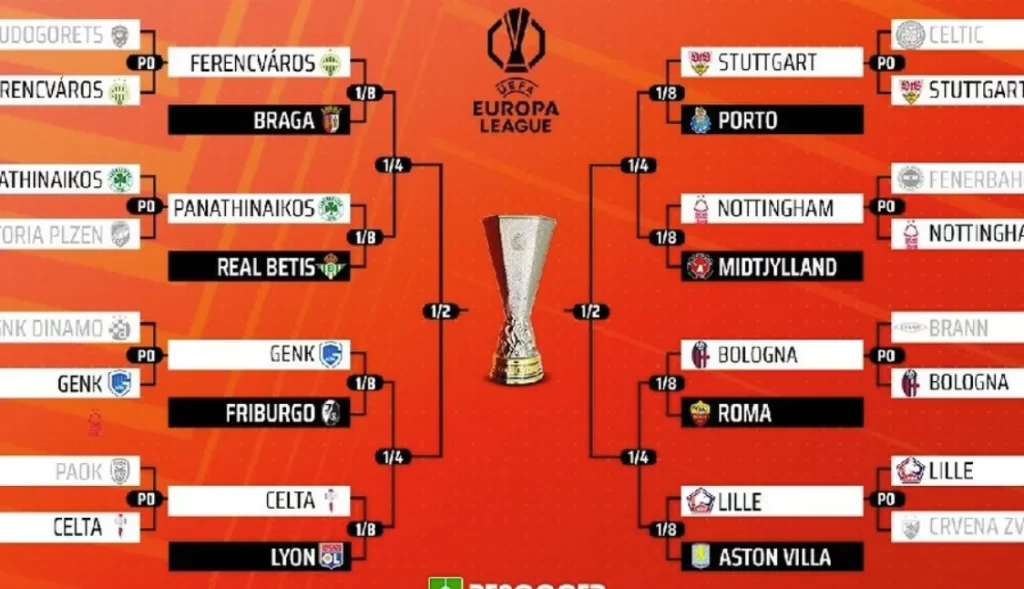
The UEFA Europa League is heating up as the knockout rounds approach, bringing football fans across the globe an electrifying mix of tactical battles, historic rivalries, and unexpected twists. With the group stage now firmly in the rearview mirror, clubs from across Europe are preparing for high-stakes clashes that will determine who advances toward the prestigious final. Whether you are a die-hard supporter or a casual observer, understanding the new format and bracket structure is essential to following the drama. This season’s revamped competition, covered extensively by Melbet, promises to deliver unforgettable moments, and we will break down everything you need to know about the knockout phase, including the bracket, fixtures, and format changes that could reshape how teams approach the tournament.
The New Europa League Format: What Has Changed?
The 2024-25 season marks a significant shift in the structure of the UEFA Europa League, moving away from the traditional group stage format that has been used for decades. Instead of 32 teams divided into eight groups of four, the competition now features a single league phase with 36 teams, each playing eight matches against different opponents. This innovative approach, modeled after the Swiss system used in chess tournaments, aims to increase competitive balance and provide more meaningful matches throughout the season.
How the League Phase Worked
Each team faced eight unique opponents, four at home and four away, with points accumulating in a single standings table. The top eight teams in the league phase automatically qualified for the Round of 16, bypassing the knockout round play-offs entirely. Teams finishing between 9th and 24th place entered the knockout round play-offs, while those placed 25th or lower were eliminated from European competition entirely. This new system eliminated the safety net of third-place teams dropping into the Conference League, raising the stakes for every match.
The Knockout Round Play-Offs
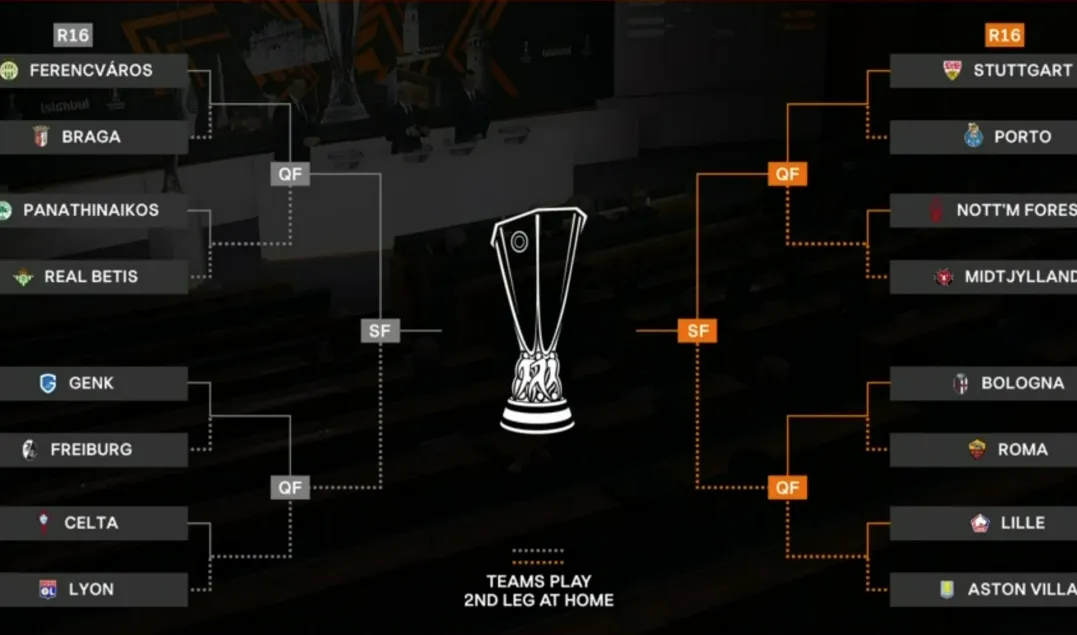
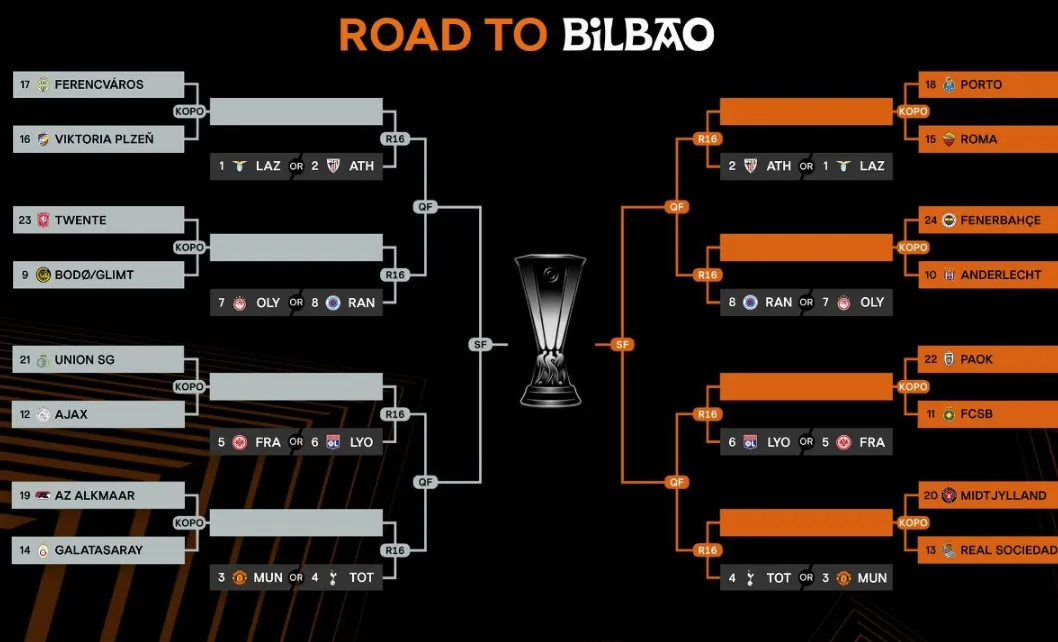
The knockout round play-offs served as a preliminary round for teams that finished between 9th and 24th place in the league phase. These two-legged ties determined which eight teams would join the top eight in the Round of 16. The draw for this round paired teams based on their league phase finishing positions, with higher-ranked teams facing lower-ranked opponents. For instance, the 9th and 10th place teams were drawn against the 23rd and 24th place teams, creating a bracket that rewarded consistency throughout the league phase.
The Europa League Knockout Bracket: Path to the Final
The bracket for the knockout rounds follows a predetermined path, meaning teams know their potential opponents in advance based on their league phase performance. This transparency adds an extra layer of strategy, as clubs can plan for potential matchups several rounds ahead. The final will be held at the San Mamés Stadium in Bilbao, Spain, a venue known for its passionate atmosphere and rich football history.
Round of 16: The Elite Eight Enter the Fray
The Round of 16 features the eight teams that automatically qualified from the league phase (seeded teams) along with the eight winners from the knockout round play-offs. The seeded teams were drawn against the play-off winners, with the seeded teams enjoying the advantage of playing the second leg at home. This round typically produces some of the most compelling matches of the tournament, as top-tier clubs from Europe’s major leagues begin to face each other.
Key Round of 16 Matchups to Watch
One of the most anticipated ties involves Manchester United, who finished in the top eight of the league phase, facing a play-off winner that could include Real Sociedad or Fenerbahçe. The Red Devils have shown inconsistent form in domestic competitions but have often reserved their best performances for European nights. Another intriguing matchup involves Tottenham Hotspur, who also secured automatic qualification, potentially facing a tricky opponent like Olympiacos or Rangers.
Quarter-Finals: The Competition Intensifies
The quarter-finals represent the stage where the Europa League truly separates contenders from pretenders. With eight teams remaining, every match becomes a tactical chess match, and the margins for error shrink dramatically. The draw for this round is open, meaning any remaining team can face any other, creating the potential for high-profile clashes between former European champions and rising powers.
Historical Rivalries Renewed
Should certain teams advance, we could witness renewals of classic rivalries that have defined European football. A potential matchup between Roma and Ajax would bring back memories of their dramatic encounters in the 1990s, while a tie between Athletic Club and Porto would showcase Spanish flair against Portuguese resilience. These matches often produce moments of individual brilliance that become part of Europa League folklore.
Semi-Finals: Two Steps from Glory
The semi-finals represent the final hurdle before the grand finale in Bilbao. By this stage, only four teams remain, each believing they have a realistic chance of lifting the trophy. The two-legged format adds an extra layer of drama, with away goals potentially deciding ties that remain level after both matches. Teams must balance defensive solidity with attacking ambition, knowing that a single mistake could cost them a place in the final.
Key Fixtures and Dates to Remember
The knockout rounds follow a compressed schedule, with matches taking place every two weeks to accommodate domestic league commitments. Here are the critical dates for the remainder of the competition:
- Round of 16 First Leg: March 6, 2025
- Round of 16 Second Leg: March 13, 2025
- Quarter-Final First Leg: April 10, 2025
- Quarter-Final Second Leg: April 17, 2025
- Semi-Final First Leg: May 1, 2025
- Semi-Final Second Leg: May 8, 2025
- Final: May 21, 2025, at San Mamés Stadium, Bilbao
How the Schedule Impacts Team Preparation
The condensed schedule places significant demands on squad depth, as teams playing in three competitions simultaneously must rotate players effectively. Managers who can maintain consistent performances across multiple fronts often find success in the Europa League, while those who rely too heavily on a core group of starters risk burnout at critical moments.
Tactical Trends Emerging in the Knockout Rounds
As the competition progresses, several tactical trends have emerged that could define the knockout rounds. Teams that successfully implemented high-pressing systems during the league phase have found particular success, disrupting opponents’ build-up play and creating scoring opportunities from turnovers. However, this approach carries risks, as well-organized counter-attacking teams can exploit the space left behind by aggressive pressing.
The Importance of Set Pieces
Set pieces have become increasingly important in knockout football, where matches often remain tight and defensive structures are harder to break down. Teams that invest significant training time in attacking set pieces, particularly corners and free kicks, gain a valuable weapon that can decide closely contested ties. The presence of tall, athletic defenders who can contribute goals from set pieces has become a priority for many clubs during the transfer window.
Squad Rotation and Player Management
The demands of playing in multiple competitions mean that effective squad rotation is essential for Europa League success. Managers must carefully manage their players’ workloads, ensuring that key performers are available for the most important matches while still maintaining competitive performances in domestic leagues. This balancing act often separates successful teams from those that falter in the latter stages of the competition.
What This Means for the Future of European Football
The new format represents UEFA’s attempt to address long-standing criticisms of the traditional group stage, which sometimes produced meaningless matches between teams that had already qualified or been eliminated. By keeping every team engaged throughout the league phase, the new system has increased the competitive intensity of early-round matches while providing more opportunities for dramatic storylines to emerge.
Comparing the New Format to Previous Editions
Early indications suggest that the new format has achieved its primary goals. The league phase produced more high-quality matches than previous group stages, with teams battling for position until the final matchday. The knockout round play-offs added an extra layer of excitement, giving teams that narrowly missed automatic qualification a second chance to advance. However, some critics have noted that the expanded format places additional strain on players’ schedules and reduces the significance of individual matches.
Player Perspectives on the Changes
Several prominent players have shared their thoughts on the new format, offering mixed opinions. Some appreciate the increased number of meaningful matches, while others express concern about the physical demands of playing eight league phase matches instead of six. The true test will come during the knockout rounds, where the format’s impact on team preparation and tactical approaches will become fully apparent.
Conclusion: The Road to Bilbao Awaits
The Europa League knockout rounds promise to deliver some of the most compelling football of the season, with Melbet providing comprehensive coverage of every match. From the tactical battles in the Round of 16 to the high-stakes drama of the semi-finals, each stage of the competition offers unique challenges and opportunities for the remaining teams. The new format has injected fresh energy into the tournament, and the path to the final in Bilbao is more unpredictable than ever. Whether you are supporting a traditional powerhouse or an underdog making a deep run, this season’s Europa League has something for every football fan. Share your predictions in the comments below, and do not forget to explore more analysis and updates on our website!
