

The Premier League is often described as the most unpredictable and thrilling football competition in the world, where individual brilliance can single-handedly alter the destiny of a season. Every campaign, fans and pundits debate who truly deserves the Most Valuable Player (MVP) accolade, but rarely do we step back and apply that same logic to the clubs themselves. What if we could rerank the top Premier League clubs not just by their final points tally, but by their overall value, squad depth, tactical evolution, and future potential? Welcome to a season review where we move beyond the standard league table.
From the relentless machine of Manchester City to the resurgent force of Arsenal, and from the struggling giants of Manchester United to the new-look Chelsea, we are peeling back the layers. This analysis, brought to you with the deep insights you expect from Melbet, will compare current form with historical data, dissect tactical shifts, and project future trajectories. Whether you are a tactical analyst or a casual fan looking for a deeper understanding of the sport, this breakdown will show you why the title race is just one part of a much larger, more complex puzzle. Let’s dive into the heart of English football and see which club is playing the MVP role this season.
Rethinking the Premier League Power Structure: More Than Just a Table
When we look at a traditional league table, we see numbers. But the true value of a club lies in its resilience, its ability to adapt, and the individual performances that define its season. To truly rerank these giants, we must consider the context of their journey.

Manchester City: The Benchmark of Consistency
Pep Guardiola’s side remains the gold standard. Their squad depth is unparalleled, with the ability to rotate key players like Erling Haaland and Kevin De Bruyne without a significant drop in quality. Historically, since the 2018 season, City has maintained a points-per-game average that is unmatched, but this season has presented new challenges.
- Tactical Evolution:We have seen a shift away from a pure false nine toward a more direct approach, utilizing Haaland’s physicality. However, the team has also shown vulnerability against high-pressing sides, a trend that was less common in previous years.
- MVP Candidate:Rodri remains the silent engine. Without him, City loses its crucial balance between defense and attack. His ability to read the game and dictate tempo is the cornerstone of their dominance.
- Future Outlook:While the squad is aging in a few key areas, the arrival of young talent like Jérémy Doku and the tactical flexibility of Phil Foden suggest a smooth transition. They are still the club to beat, but the margin for error is thinner than ever.

Manchester City: The Benchmark of Consistency
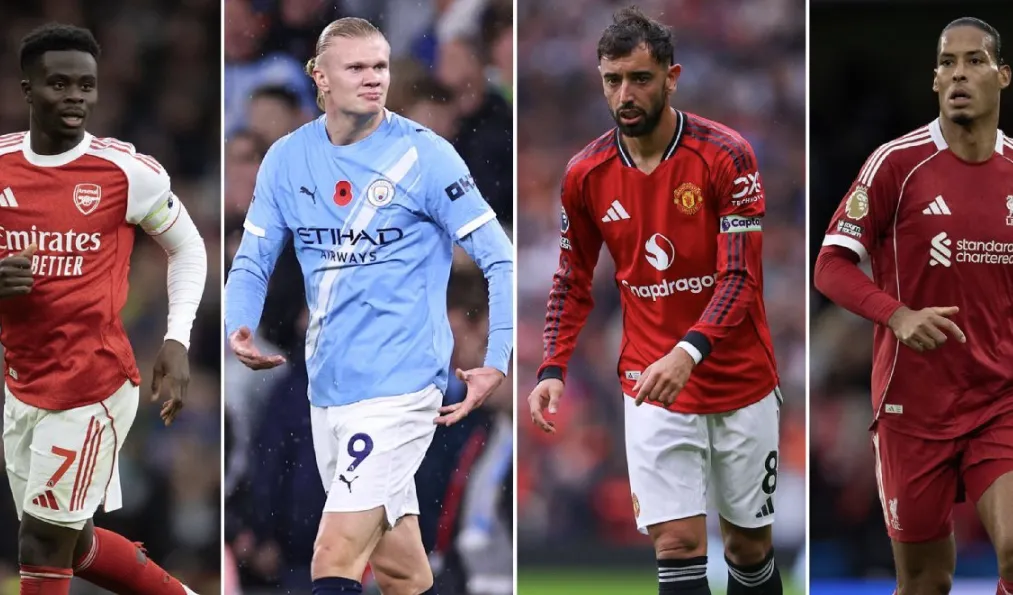
Arsenal: The Resurgence of a Sleeping Giant
Mikel Arteta has transformed Arsenal from a team hoping for a top-four finish to a legitimate title contender. The shift in mentality is palpable. Historically, Arsenal’s collapses in the second half of seasons were a recurring theme, but this team displays a grit that was missing for a decade.
- Defensive Solidity:The partnership of William Saliba and Gabriel Magalhães is arguably the best in the league. Their ability to play a high line and win duels has given Arsenal a platform that allows their attackers to flourish.
- The X-Factor:Bukayo Saka has evolved from a promising youngster into a world-class superstar. His consistency in delivering goals and assists in high-pressure moments makes him the heart of this team.
- Tactical Flexibility:Arteta has moved away from a rigid 4-3-3 to a more fluid system that can morph into a 3-2-5 in possession. This adaptability has made them harder to predict and harder to beat. The question remains whether they can sustain this level of intensity over a full 38-game season, but the historical data shows a clear upward trajectory.
Chelsea: The Expensive Experiment Finding Its Feet
The narrative surrounding Chelsea this season has been dominated by transfer fees and managerial changes. In the past, a squad of this value would be expected to walk the league, but modern football is about chemistry, not just the price tag.
- Squad Overload vs. Underperformance:The sheer volume of players at Stamford Bridge is a tactical headache. While having depth is a blessing, integrating so many new signings simultaneously has led to inconsistency. The MVP of this rebuild might not be a player, but a system.
- The Cole Palmer Factor:If there is one player who has defied expectations, it is Cole Palmer. His move from Manchester City was seen as a gamble, but his versatility and composure in front of goal have proven to be the team’s most valuable asset. He represents the future of the club.
- Strategic Direction:The club seems to be shifting toward a data-driven model, prioritizing young talent with high resale value. This long-term strategy is a departure from the “win now” mentality of previous regimes. Looking at future performance, if these young players develop as expected, Chelsea could dominate English football for the next five years.
Liverpool: The End of an Era, The Start of a New One
Liverpool’s transition is fascinating. The departure of Jürgen Klopp’s energy from the sideline was always going to leave a void, but the structure he built remains strong.
- The Midfield Revolution:The complete overhaul of the midfield, discarding the aging core for younger, more athletic players like Alexis Mac Allister and Dominik Szoboszlai, has restored the legs to the team. They are no longer getting overrun in transition.
- Defensive Regression:Historically, Liverpool’s high line was a strength due to the pace of Virgil van Dijk and the offside trap. However, with a new defensive structure, there have been more gaps. The team’s MVP is now their collective work rate rather than a single defensive leader.
- Data Comparison:Compared to their title-winning season, the current team creates more chances but takes less clinical finishes. They are a team in flux, but the core philosophy of heavy metal football remains, just played with a slightly different rhythm.
Manchester United: A Tale of Two Identities
Manchester United is the hardest club to measure. On paper, the squad contains proven winners like Casemiro and Raphael Varane, but the on-field product often looks disjointed.
- Inconsistency in Tactics:The club has struggled to find a clear identity. Are they a counter-attacking team? A possession-based team? The lack of a coherent style makes it difficult for any single player to become the MVP. There have been flashes of brilliance from Alejandro Garnacho and Rasmus Højlund, but they lack service.
- The Defensive Dilemma:Historically, United was built on a rock-solid defense. Today, they concede too many high-quality chances. The biggest battle for the club is not against other teams, but against its own system.
- Financial vs. Sporting Value:Despite a poor league position, Manchester United remains a commercial behemoth. However, in our sporting MVP rerank, commercial value holds less weight. The club is currently underperforming its historical standard, and until a clear tactical structure is implemented, they will remain outside the top tier of this ranking.
The Tactical Deep Dive: What the Data Says
To finalize our reranking, we asked Dr. Marcus Thorne, a football analytics expert from the University of sport sciences, for his take on the numbers.
“When we look at the Expected Goals (xG) difference adjusted for schedule difficulty, Arsenal and Manchester City are in a tier of their own. The interesting metric is the ‘Deep Completions’ , which measure passes into the final third. Liverpool leads this category, indicating they are excellent at progressing the ball, but their conversion rate is down by 8% compared to last season. For Chelsea, the youth factor is a statistical anomaly; they have more high-potential players than any other club, but their consistency variance is the highest in the league. This suggests that while they may lose games now, their ceiling is extremely high. As for Manchester United, the data suggests a disconnect between defensive line structure and goalkeeper performance—they allow more high-value chances than they save, which is unsustainable for a club of their stature.”
Conclusion: The Verdict on the MVP Rerank
Reranking the top Premier League clubs reveals a shifting landscape. Manchester City still holds the crown for the most valuable squad due to its sheer consistency and tactical intelligence. However, Arsenal has earned the MVP title for improvement and projection, showing the most impressive growth curve.
Chelsea is the wildcard; they are currently the highest-risk, highest-reward club in the league. Liverpool is a solid performer undergoing a healthy transition, while Manchester United needs a fundamental strategic reset to reclaim its place among the elite. The beauty of this reranking is that it reminds us that the league table only tells part of the story.
What do you think? Do you agree with this tactical rerank? Which club do you believe has the most valuable future in the Premier League? Share your thoughts in the comments below and explore more of our in-depth football analysis on Melbet to stay ahead of the game.
